Section by Nikki Mogadas
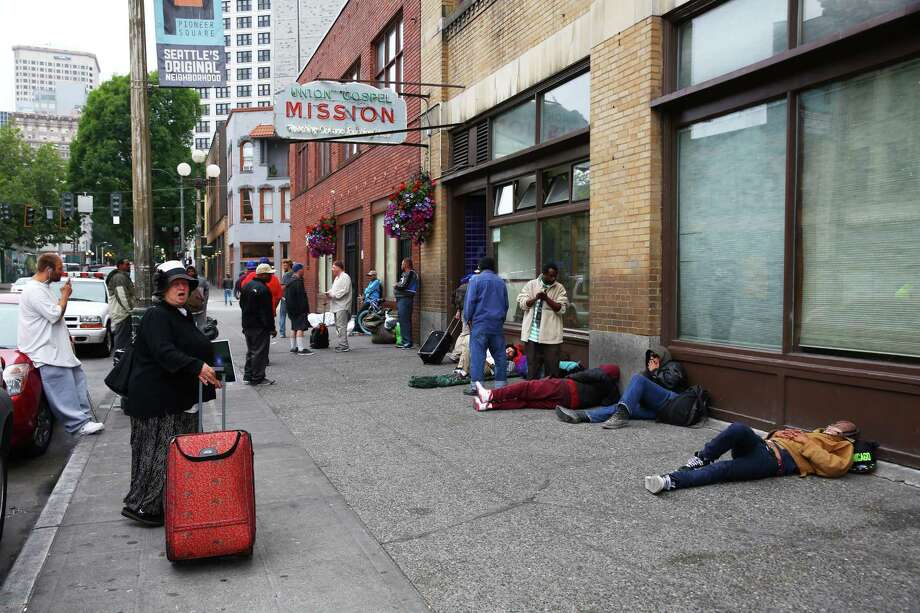
As the economy continues to grow and housing prices continue to rise, low-income households are struggling to find places to live because of the limited or inaccessible affordable options. Individuals and families are being forced out of their long-time homes because they simply cannot afford their rent anymore. With over 12,000 individuals living in the Greater Seattle Area without a permanent roof over their heads, Seattle’s homeless population will not stop growing anytime soon. Emergency shelters only have so much room to provide for the homeless and do not act as a permanent housing solution.
Affordable housing is necessary for Seattle’s sustainability. If Seattle does not address its affordable housing crisis, the number of people ending up on the streets will continue to grow and the city will be unable to maintain its population. Social equity is an integral aspect of sustainable development and providing affordable housing for its population is essential for Seattle’s growing economy. Homelessness costs Seattle’s economy about $1.1 billion, so in order to maximize Seattle’s economic growth as well as its social growth, affordable housing needs to become a priority. [1] Supporting the homeless and helping them access permanent housing will reduce the cyclical tendency of homelessness. Similarly, creating new affordable housing will establish a lasting sustainable solution that ultimately helps both those who are homeless as well as the city as a whole.

One of the most prominent barriers towards placing those who are homeless in permanent housing is the lack of supply and accessibility of affordable housing. Several organizations and programs work towards increasing access to affordable housing for those experiencing homelessness so that they can quickly get off the streets and into permanent residence. However, increasing access to affordable housing will only help solve the homelessness crisis in its current state. Seattle must increase its supply of affordable housing to meet the increasing demand that comes with rising housing and rent prices. In the long-run, Seattle will need to invest in creating new affordable housing to account for its ever-growing economy and population.

Increase Accessibility: King County Rapid Re-Housing
King County has an intervention program known as Rapid Re-Housing, in which homeless individuals or families are quickly assisted and placed in permanent housing. Rapid Re-Housing does not focus on any factors other than homelessness and seeks to help as many people as they can, regardless of any additional circumstances related to income, criminal record, sobriety, or employment. This program focuses on three essential components: 1) housing location, 2) case management, and 3) financial assistance. [2]
1) Housing Location: Work with landlords and homeowners to find suitable housing appropriate for each particular individual or family.
2) Case Management: Case Managers support individuals and families through stabilization in housing and help them get to a place where they are no longer at risk of returning to homelessness.
3) Financial Assistance: Use a short-term subsidy to help the individual or family pay for housing immediately.

Increase Supply: A Regional Coalition for Housing

A Regional Coalition for Housing (ARCH) is an organization that is working to preserve and increase the supply of affordable housing, specifically in East King County. ARCH has worked with other local organizations and private developers to create housing and assist those in search of affordable places to live. ARCH aims to engage with the community to spread awareness of the need for affordable housing. [4]
They accomplish their mission through a variety of actions:
• Making the most of public resources to encourage private, non-profit investment into affordable housing.
• Gather technical resources to help develop housing policies and programs.
• Aiding local organizations working towards affordable housing.
• Promoting community involvement to address housing needs.
• Informing the community about housing problems.
[1] Stringfellow, Maggie, & Wagle, Dilip. The economics of homelessness in Seattle and King County”. McKinsey&Company. (May 2018). Retrieved from: https://www.mckinsey.com/featured-insights/future-of-cities/the-economics-of-homelessness-in-seattle-and-king-county
[2] “Seattle – King County Rapid Re-Housing Model Guidelines”. (Feb 2017). Retrieved from: http://allhomekc.org/wp-content/uploads/2017/06/FINAL-Sea-KC-RRH-Guidelines_created-Feb-2017.pdf
[3] “Rapid Re-Housing”. All Home King County. (2019). Retrieved from: http://allhomekc.org/rapid-re-housing/
[4] “About ARCH”. A Regional Coalition for Housing. (2013). Retrieved from: http://www.archhousing.org/about-arch/index.html
 Housing for All