A transformative, sustainable solution to solving the Seattle homelessness crisis through the power of local communities
-Section by Mikey Morrissey
The Start of a Movement:
Rex Hohlbein started his residential architect career designing multi million dollar homes in the Seattle area [1]. However, he began to realize the detrimental scope of the Seattle homelessness crisis through engaging in meaningful conversations and befriending the homeless surrounding his office building [2]. Inciting a call to action, Rex thus launched the first of many successful projects through the Facing Homelessness organization: “Photojournalism”. As a means to inspire others, Rex created a Facebook page to share the images and stories of those facing homelessness in our local communities. The page has amassed over fifty thousand followers in the nine years since its creation and continues to provide a platform and a voice for those who need it most. [2].
Rex and those at Facing Homelessness hopes that sharing these stories will implore others to converse with the homeless in their neighborhoods. Homelessness can often generate a sense of invisibility from the little recognition expressed by the thousands that walk by them everyday. Saying something as simple as hello can go a long way to spread kindness and provide visibility. For the simple hello that Rex began with in 2010 has now created a positive movement for the Seattle area and changed the lives of so many.
The Next Step Forward:
Another project started through the Facing Homelessness initiative was “The Window of Kindness”, where clothing and other essential supplies of life are distributed to those who need them [2]. In an effort to return to the original inspiration of the organization, people are also encouraged to stop by for meaningful conversations. This idea of sharing kindness and conversations through the compassion of community is exemplified by the motto of the organization: “Just Say Hello”. Members of the community are also encouraged to book Friday appointments to join the discussion and share opinions, learn more through asking questions about the projects, seek guidance from others, and grow stronger bonds with those in their local community.

An outside perspective of the Window of Kindness 
Sara, Facing Homelessness’s Executive Director, converses with a community member
The BLOCK Project:
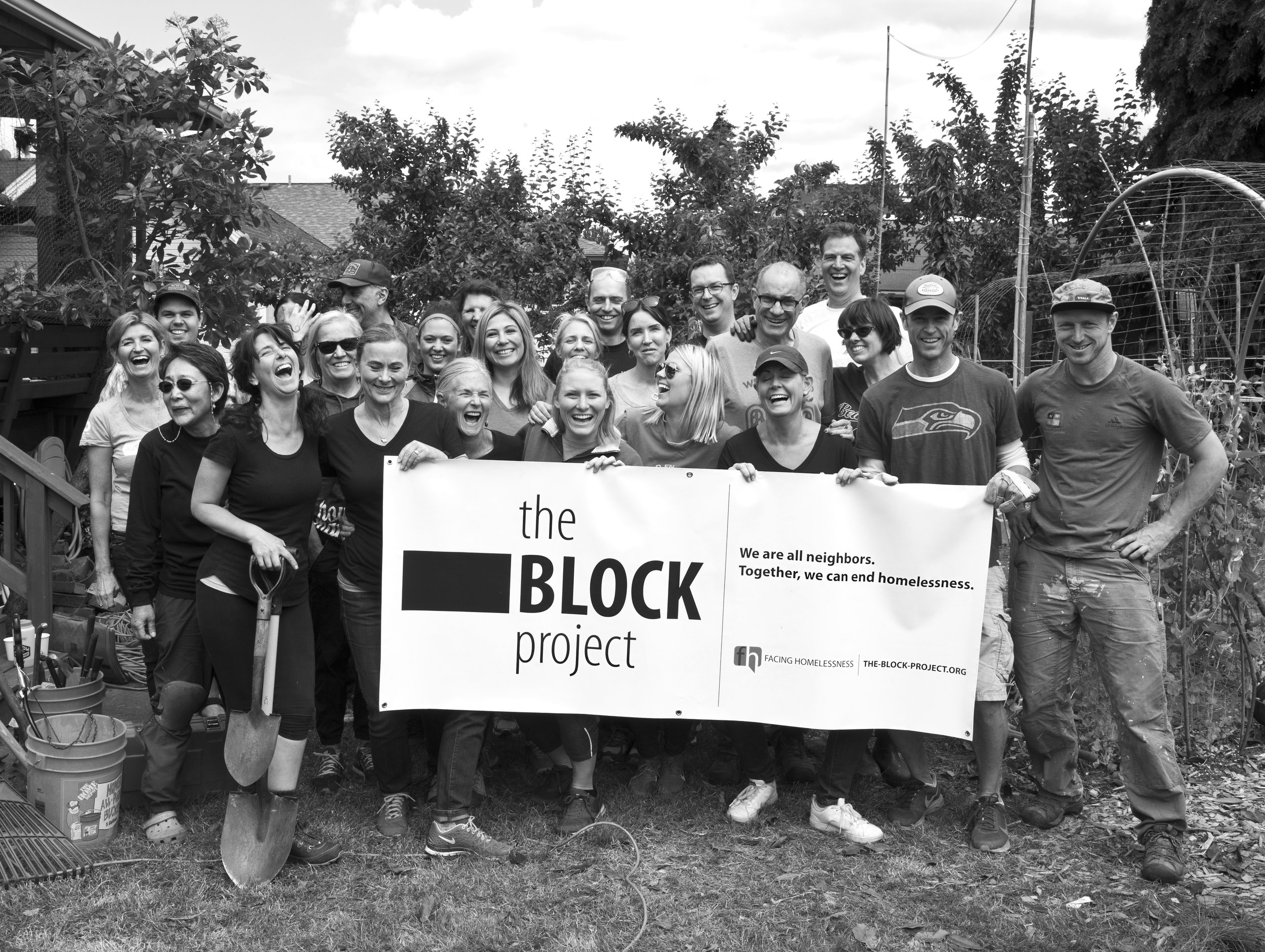
In an effort to combine their passions for architecture and helping those in need, Rex and his daughter Jennifer LaFreniere founded The Block Project with a simple vision: “Neighbors on the block will marshal their forces to help that person on the sidelines of society” [1]. The project asks volunteering community members to “host” those facing homelessness by building small, 125 sq ft homes in their backyards [2]. This transformative solution can produce resounding positives in a community. Building only a single house on every block in the Seattle area would result in double the number of houses compared to the local homeless [4]. So far, four families have pledged to host with 27 other families placed on the waitlist for future construction [1].
While some may attribute this campaign to being a fruitless attempt, monetary figures seemingly contradict this belief. Seattle’s rising budget allocation for homelessness operations reached $63 million in 2018, with projections expecting continued growth in the subsequent years [1]. Scaling up this solution, such as providing incentives to participants, in the Seattle area as well as other affected cities nationally could prove very beneficial. Pre-constructing and shipping the basic structure to the site could also speed up time tables and lower costs once the project becomes large enough. While current funding predominantly comes from donors and volunteer labor, future expansion could entail support from local governments.
Additionally, these miniature homes exemplify sustainable living and the growing movement opposing urban sprawl. Through this project, no additional land is used as houses are built on pre-established properties [2]. These homes are also “off the grid” and energy-independent while still providing the necessities of the modern world such as a functioning kitchen and shower. While current homes are not constructed to be water-independent, future plans are in place and current designs include composting toilets and subsurface irrigation [3]. These simple, cutting edge designs are transformative solutions that address both sustainability and combating homelessness.
While the benefits of this project are predominantly positive, some questions still remain. The safety of the homeowner and nearby neighbors is a key concern for many. However, many measures are in place to prevent such complications. First, hosts inform neighbors prior to the construction of the miniature homes to ensure transparency and address any concerns. The entire project can be vetoed if just a single neighbor on the block rejects the proposal. Second, illegal drugs are not permitted on the premises as required in the legally binding contract signed by the tenant. Third, violent felons will never be considered. Fourth, any problems that arise with the tenant are dealt through local social service workers. If the issues becomes insurmountable, the resident can be asked to leave [3]. These measures are necessary for both the success of the project and to ensure the safety of those participating. One final roadblock for the expansion of the project is cost and manpower. The majority of the funding is currently accrued through donations while volunteers provide the bulk of the labor. Future scaling would require increased funding to shorten waitlists and increased manpower, whether through paid workers or expanding volunteer outreach, to reduce the time of each project.

Throughout the Seattle area, many programs, such as The BLOCK Project, are building transformative, sustainable solutions to address the many ongoing problems in our city. Facing Homelessness has proved that the compassion of communities is a capable means of solving these issues. Nevertheless, one thing is certain: The BLOCK Project will continue to address the homeless crisis block by block until it is ensured that there is housing for all.
[1] Cunningham, Jenny. “Would you house a homeless man in your backyard? This couple said yes.” The Guardian. (Oct 2017). Retrieved from: https://www.theguardian.com/us-news/2017/oct/11/seattle-homelessness-backyard-tiny-home-block-project
[2] “Programs.” Facing Homelessness. Retrieved from: https://www.facinghomelessness.org/programs
[3] Barnett, Erica. “How Backyard Cottages Could Help Seattle’s Homeless Problem.” Seattle Magazine. (Sept 2018). Retrieved from: https://www.seattlemag.com/news-and-features/how-backyard-cottages-could-help-seattles-homeless-problem
[4] Mirfendereski, Taylor. “‘BLOCK Project’ calls on Seattle residents to house homeless in backyards.” K5 News. (April, 2017) Retrieved from: https://www.king5.com/article/news/local/block-project-calls-on-seattle-residents-to-house-homeless-in-backyards/281-431369585
 Housing for All